Christmas
Little House on the PrairieChristmas arrives in the Ingalls family's little house on the High Prairie as the single most concentrated moment of joy in a year otherwise marked by hardship, danger, and loss. The holiday is the emotional climax of the book's middle section, a celebration that nearly does not happen at all, and that is saved only by an act of extraordinary physical courage. In a narrative built around floods, wolves, malaria, prairie fire, and the constant threat of Indian attack, Christmas stands apart as the one occasion when the family's material poverty is transformed into abundance, and when the generosity of a neighbor outweighs every obstacle the frontier can place in the way. The day becomes the story's most vivid image of gratitude, of the power of small objects to carry enormous meaning, and of the way human effort can overcome even the most forbidding natural conditions.
The Threat of a Christmas Without Snow
The approach of Christmas finds the Ingalls family in a state of quiet anxiety. The prairie has changed with the season: the days are short and cold, the wind howls, and day after day cold rain falls. Mary and Laura play close to the fire and listen to the wet sound of the rain, wishing they could see snow. The absence of snow is not merely a disappointment but a practical catastrophe, because Santa Claus cannot travel without it. Laura worries openly that Santa Claus cannot travel without snow, while Mary raises the deeper fear that, with or without snow, Santa Claus might not be able to find them at all, so far away in Indian Territory. The girls ask Ma what day it is and how many more days remain until Christmas, and they count the days until only one is left. On that final morning, with rain still falling, Laura voices the family's dread: perhaps there won't be a Christmas this year. She continues to hope, but when Ma opens the door to let in some air and Laura hears the noise of the creek, she knows there is not going to be a Christmas that year. The creek is full and roaring with water, and Santa Claus could not possibly cross it.
The creek is not the only obstacle. Pa comes in bringing a big fat turkey for Christmas dinner, but when Mary asks whether the water in the creek is going down, Pa replies that the water is moving fast and that it will be too dangerous for Mr Edwards to try to cross it now. Mr Edwards had been invited to eat Christmas dinner with the family, but now it looks impossible. Pa says plainly that he does not think Edwards will be there tomorrow. Mary draws the obvious conclusion: then Santa Claus can't come either. Ma tries to soften the blow, saying it is too bad but that she knows Santa hasn't forgotten the girls and will come next year. The family prepares to face a Christmas without celebration, without gifts, and without the neighbor who had promised to bring the presents from Independence.
Mr Edwards Swims the Creek
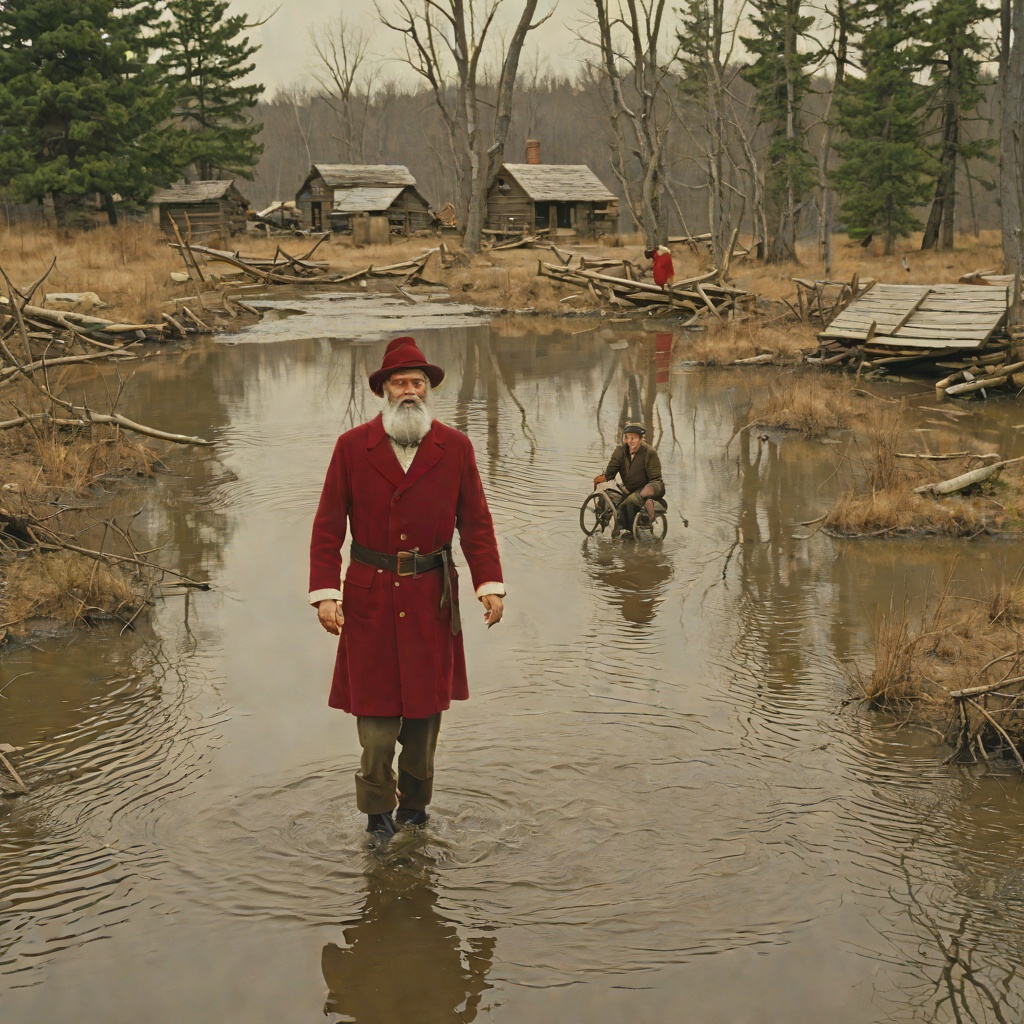
The next morning, the impossible happens. Mr Edwards arrives at the house, shaking with cold, and Pa urges him to come in by the fire. Mr Edwards explains that he swam across the creek, carrying his clothes on his head. Pa protests that it was too dangerous, that the family is happy he is there but that no Christmas dinner is worth such a risk. Mr Edwards replies with words that define his character: the little ones needed a Christmas, and he had their presents from Independence, so no creek could stop him. Laura, sitting straight up in bed, shouts to ask whether he saw Santa Claus in Independence, and Mr Edwards confirms that he did. The exchange captures the entire moral economy of the book: a neighbor's promise, a child's need, and a physical feat undertaken without hesitation. Mr Edwards' swim across the flooded creek is the hinge on which the entire Christmas celebration turns, and it transforms him from a friendly neighbor into something closer to a folk hero, a man who literally risks his life so that two little girls can have a Christmas.
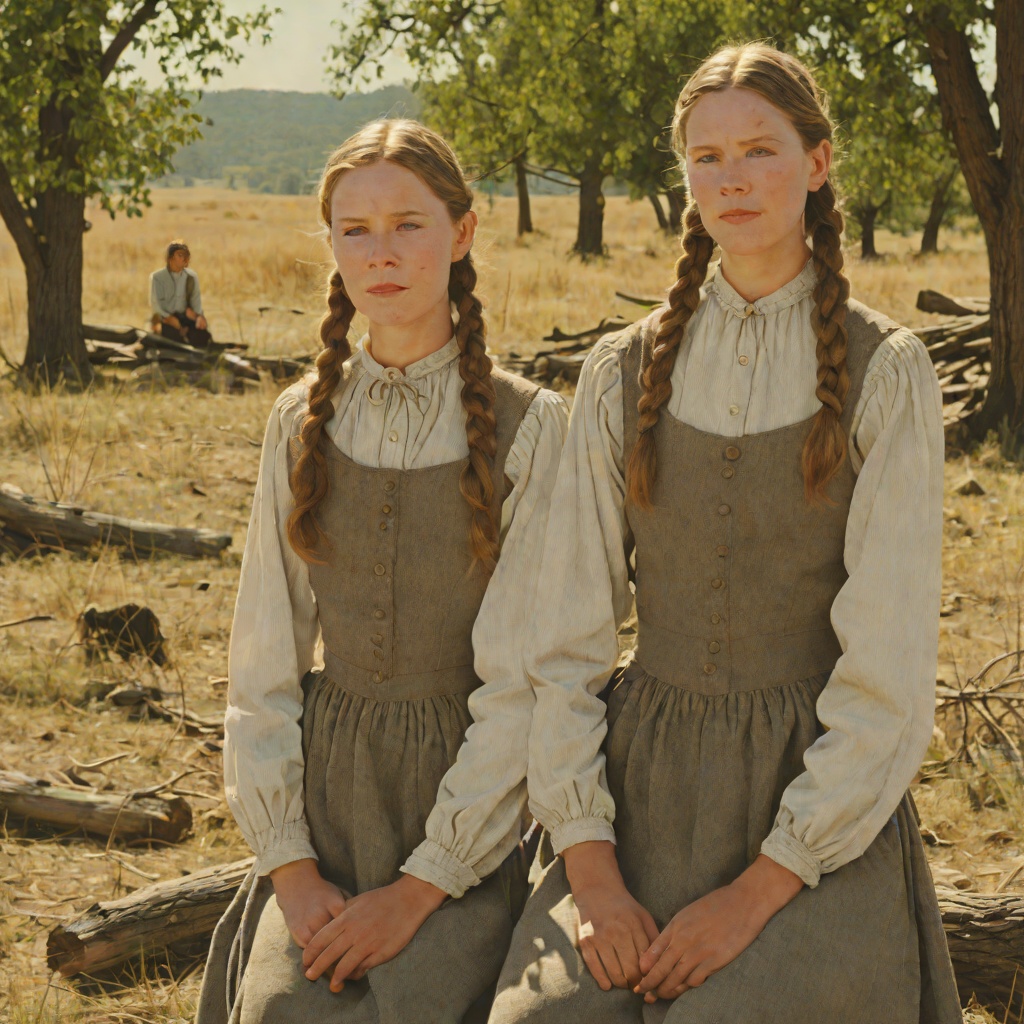
The gifts Mr Edwards carries are modest by any external standard, but they are overwhelming in their effect. When Ma tells the girls they may look, something is shining bright in the top of Laura's stocking. She jumps out of bed, and so does Mary, but Laura beats her to the fireplace. The shining thing is a bright new tin cup, and Mary has one just like it. These new tin cups are their very own, the first possessions of that kind they have ever had, and each now has a cup to drink from. Laura jumps up and down and shouts and laughs, while Mary stands still and looks with bright eyes at her own cup. The stockings are not empty yet. The girls pull out two long sticks of red and white candy, which they look at and look at; Laura puts her tongue on her candy just to taste it, while Mary only looks at hers. Then they each pull out a little cake shaped like a heart, with white sugar like snow on top, too pretty to eat. Ma asks whether they are sure the stockings are empty, and when the girls put their arms down inside them again, they find in the toe of each stocking a shiny bright new penny. They cannot speak. There has never been such a Christmas.
The gifts are not merely objects; they are the material proof that the family has been remembered, that the outside world knows they exist, and that their isolation in Indian Territory has not cut them off from the larger community. The tin cups, the candy, the heart-shaped cakes, and the pennies are all the more precious because they are so few and so simple. Laura's reaction is pure physical joy, while Mary's is a quieter, more contained wonder, and the contrast between the two sisters' responses is one of the book's small, precise observations of character.
A Christmas Dinner of Sweet Potatoes and Gratitude
The celebration continues with the Christmas dinner itself. Ma gently reminds the girls to thank Mr Edwards, and they do so with all their hearts. Pa shakes Mr Edwards' hand, and Pa, Ma, and Mr Edwards all look like they are almost crying, though Laura does not understand why. The adults' emotion is the story's quiet acknowledgment of what Mr Edwards has risked and what his gesture means. Then Ma's eyes open wide, because Mr Edwards is taking sweet potatoes from his pockets, brought all the way from town for the Christmas dinner. Pa protests that it is too much, that they can never thank him enough. The dinner that follows is a feast by frontier standards: the big, tasty turkey, bread that Ma has made, the sweet potatoes, and after all that, dried blackberries and little cakes. The meal is the material culmination of the day, the point at which the family's usual diet of prairie chicken and cornbread gives way to something richer and more festive.
After dinner, Pa, Ma, and Mr Edwards sit by the fire and talk about Christmas times back in Wisconsin, while Mary and Laura look at their beautiful cakes and play with their pennies, little by little eating their sticks of candy. The scene is one of the book's rare moments of pure, uncomplicated happiness, a pause in the narrative's steady accumulation of dangers and losses. The adults' conversation about Wisconsin connects the family's present hardship to a remembered past of earlier Christmases, and the girls' quiet play with their new possessions anchors the day in sensory detail. The chapter ends with the simple statement that it was a happy Christmas, and the reader understands that the happiness is not diminished by the poverty of the gifts but is instead intensified by the effort that brought them.
The Material Legacy of Christmas
The Christmas gifts resonate beyond the single day. The tin cups, in particular, become part of the family's daily life, small objects that carry the memory of Mr Edwards' heroism every time the girls drink from them. The pennies, the candy, and the cakes are consumed or kept as tokens of a day when the family's isolation was briefly broken. The Christmas celebration also stands in contrast to the other material transactions in the book. Earlier, Pa has been saving a bundle of furs to trade in Independence, and the family's economic life is built on such careful accumulation and exchange. Christmas is the one moment when goods arrive not through trade but through pure gift, and the contrast between the two modes of acquisition gives the holiday its special weight. The gifts are not earned or traded for; they are given, and the giving is the point.
The holiday also marks a turning point in the family's relationship with Mr Edwards. Before Christmas, he is a neighbor and a helper; after Christmas, he is something more, a man who has proven his loyalty through an act of physical sacrifice. The day cements the bond between the Ingalls family and their nearest neighbor, and it provides a counterweight to the growing threat of the Indians, whose presence becomes more ominous in the chapters that follow. Christmas is the last great moment of domestic peace before the narrative turns toward the war-cries, the prairie fire, and the eventual departure from Indian Territory. In that sense, the holiday is not only a celebration but a farewell to the family's brief period of security, a bright point that makes the darkness that follows more stark.
Christmas as the Book's Moral Center
Within the larger structure of the book, Christmas functions as the moral and emotional center, the moment when the values the narrative has been building — hard work, neighborliness, gratitude, and the sanctity of family — are all brought together and rewarded. The holiday is also the book's clearest demonstration of the power of small things. The tin cups, the candy, the cakes, and the pennies are objects of almost no monetary value, but they carry an emotional weight that no amount of wealth could match. The book's material culture — the plough, the furs, the fiddle, the beads — is always freighted with meaning, and the Christmas gifts are the purest example of this pattern. They are objects that exist not for use or trade but for the expression of love, and their arrival transforms the family's poverty into a kind of richness.
The Christmas chapter also reveals the book's understanding of childhood and memory. Laura's perspective is the lens through which the day is experienced, and her joy is physical and immediate: the taste of the candy, the shine of the tin cup, the feel of the penny in her hand. Mary's quieter wonder provides a counterpoint, and the two girls' different responses to the same gifts show the book's careful attention to individual character. The adults' tears, which Laura does not understand, point to a layer of meaning beyond the child's comprehension, the knowledge of what Mr Edwards has risked and what the day truly means. The chapter thus operates on two levels simultaneously: the child's experience of pure delight and the adult's awareness of sacrifice and gratitude. It is this double vision that gives the Christmas chapter its enduring power, and that makes it the book's most memorable and most often cited scene.